
How Do You Calculate Recipe Protein per Serving?
Estimate recipe protein per serving from ingredient-label totals, divided into equal shares or allocated by cooked portion weight. This is not a protein measurement.
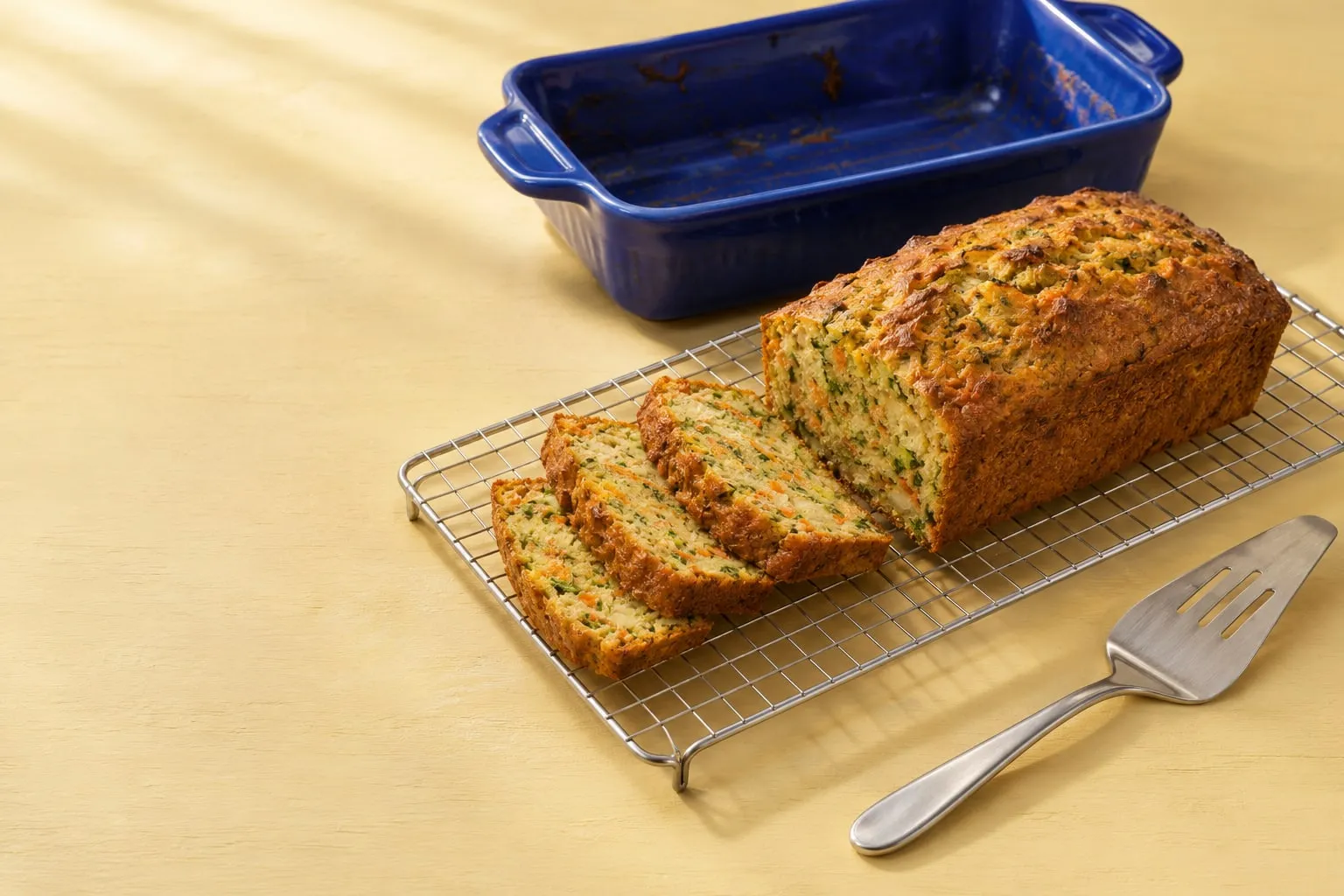
A recipe makes six servings, but the portion on your plate weighs a quarter of the finished batch. Recipe protein per serving depends on which of those two shares you mean.
Calculate each ingredient’s protein as label protein × quantity used ÷ label reference quantity, then add the results. Divide by equal servings, or multiply by portion weight ÷ cooked batch weight. This is an ingredient-based estimate, assuming batch-average distribution and carrying input protein forward without a measured retention correction, not an assay of the finished food (FDA label guide; USDA recipe methods).
How do you calculate protein in a recipe from labels?
Start with the reference quantity beside the protein figure. FDA explains that Nutrition Facts nutrient amounts refer to the stated serving; two servings contain twice the listed nutrients. A separate per-100-g column is also permitted under the cited U.S. regulation (FDA label guide; 21 CFR §101.9(b)(10), 2025 edition). Read the column heading first.
For a per-100-g entry, multiply its protein grams by ingredient grams divided by 100. For a per-serving entry, divide the quantity used by the label’s serving weight, then multiply by protein per serving. Keep both weights in grams. USDA’s recipe-calculation method likewise combines ingredient quantities with nutrient information for each ingredient (USDA recipe methods).
Match the food’s state, too. Multiplying a protein value per 100 g of prepared food by dry ingredient grams divided by 100 mixes reference bases. The regulation allows information for different forms, including as purchased and as prepared, and specifies drained solids for foods packed in liquid not customarily consumed (21 CFR §101.9(b)(9) and (e)). Preparation ingredients already represented in an as-prepared figure must not be counted twice in the arithmetic.
What does a complete recipe protein calculation look like?
These labels are invented. A, B and C are arithmetic placeholders, not real foods or products. Suppose the recipe uses these quantities:
Ingredient A: 12 g protein per 100 g × 300 g used = 36 g protein.
Ingredient B: 8 g protein per 80 g × 240 g used = 24 g protein.
Ingredient C: 4 g protein per 50 g × 150 g used = 12 g protein.
Add the three contributions: 36 + 24 + 12 = 72 g estimated batch protein. For six equal shares, 72 ÷ 6 = 12 g protein per share. That is an allocation of the ingredient total. It assumes each serving receives one sixth of that protein, rather than establishing the content of any particular slice.
Now suppose the finished edible batch weighs 900 g, excluding its container, and one portion weighs 225 g. The calculation is 72 ÷ 900 × 225 = 18 g estimated protein. That portion is one quarter of the batch. Both routes carry the input-derived 72 g forward without a measured retention correction; the weighed route also assumes the portion has the batch’s average protein concentration. Neither result demonstrates that cooking preserved all the input protein.
How does cooked weight change protein per portion?
Cooked weight supplies the denominator, not a protein assay. USDA describes cooking-related weight changes through moisture loss, water absorption and fat gains or losses. Its yield research concerns specified meat and poultry products and preparation methods, not a universal factor for every recipe (USDA cooking-yield report).
In the invented example, 225 ÷ 900 identifies the portion’s share by mass. Holding estimated batch protein fixed, a different finished weight would change the calculated protein per gram. That is arithmetic alone. USDA distinguishes weight adjustments from nutrient-retention adjustments in its recipe methods; its cake example describes moisture loss concentrating the other nutrients (USDA recipe methods).
Weight cannot establish ingredient distribution. If one hypothetical slice contains more of ingredient A than another, equal slice weights do not prove equal protein. The whole-batch total and portion weight leave that information unknown. For meals without ingredient quantities, the separate article on finding protein in restaurant nutrition information addresses listed portions instead.
How precise is recipe protein estimated from labels?
The arithmetic can be exact while its inputs are rounded. In the cited 2025 U.S. regulation, protein is declared to the nearest gram, with special provisions below 1 g. Multiplying a displayed value cannot recover the digits removed before it reached the label (21 CFR §101.9(c)(7)). More decimal places do not supply missing measurements.
A “less than 1 g” declaration is a bound, not an exact 1-g input. Nor does the label alone establish a single uncertainty percentage for the recipe. USDA describes recipe calculation as an alternative when analytical or manufacturer data for cooked foods are unavailable; ingredient arithmetic and analysis of the finished food are different evidence (protein-label regulation; USDA recipe methods).
For the worked example, a transparent record reads: “18 g estimated from invented ingredient labels; 225-g portion of a 900-g cooked batch; average distribution assumed; no measured retention correction.” Those details preserve how the result was obtained. “18 g measured protein” would describe evidence this calculation does not provide.
FAQ
Why does six servings give 12 g, but the weighed portion gives 18 g?
They are different fractions of the same hypothetical batch. Six equal-weight shares of 900 g weigh 150 g each, whereas 225 g is one quarter of 900 g. Allocating the assumed 72-g total gives 12 g and 18 g respectively.
Does “0 g protein” on a label mean none?
Not necessarily. The cited U.S. regulation permits a protein amount below 0.5 g per serving to be expressed as zero. Scaling that displayed zero cannot reveal the underlying amount (21 CFR §101.9(c)(7)).
What if some of the mixture stays in the pan?
The simple example carries all input-derived protein into the edible batch estimate. If material is excluded, its weight alone does not identify how much protein was excluded. Subtracting that mass is not a measured protein-retention correction.
References
- U.S. Food and Drug Administration. How to Understand and Use the Nutrition Facts Label. Undated; accessed November 14, 2026. FDA label guide
- U.S. Government Publishing Office. 21 CFR §101.9—Nutrition labeling of food. 2025 edition, revised April 1, 2025. Regulation PDF
- Holcomb G, Cutrufelli R, Lemar L, Stup M. USDA Agricultural Research Service, Nutrient Data Laboratory. Improving Nutrient Composition Data in the National Nutrient Databank by Applying Cooking Yield Data and Nutrient Retention Factors to Recipe Calculations. Undated. USDA methods poster
- Roseland JM and colleagues. USDA Agricultural Research Service. USDA Table of Cooking Yields for Meat and Poultry, Release 2. September 2014. USDA report